D-Day by Antony Beever
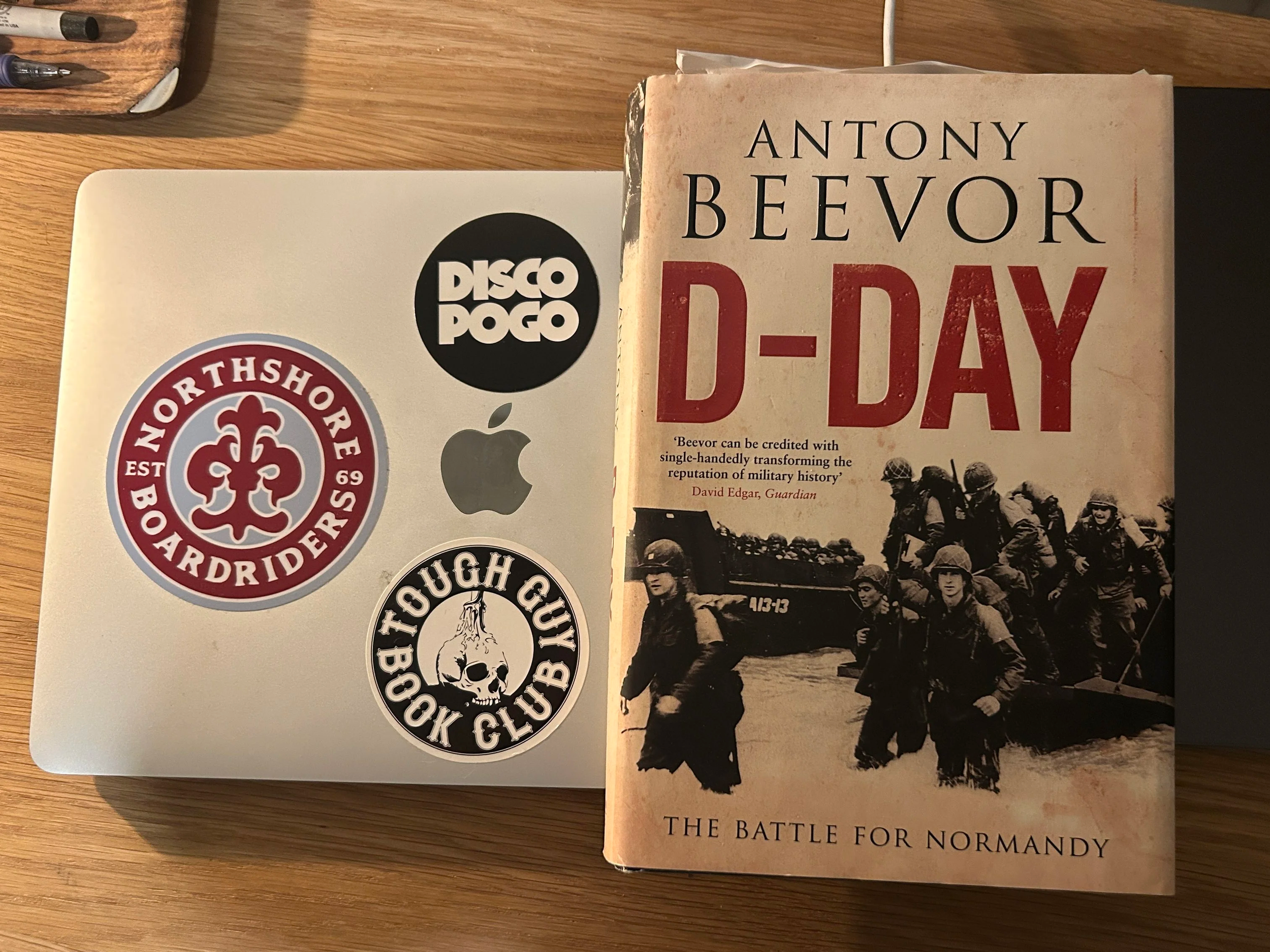
D-Day- The Battle For Normandy by Antony Beevor
At the end of this post I am probably going to write that the genre of military history is not my cup of tea, but here at the beginning I am not so sure. The writing of war histories has long been a key sub-genre in non-fiction writing. For thousands of years men and I am willing to bet it has overwhelmingly been and I suspect always will be men, have delighted in writing and reading about battles, wars, generals and military successes and failures.
Part of this is obviously part of the recording of history as a whole and I suppose another small segment is linked to the need for the world’s militaries to review and understand conflict to wage better war next time, because unfortunately there will also be another war.
None of that explains how the best written of these books by the most popular of the writers are top sellers to the general public. Why do we buy these books? Do historical books that focus on other major events like the Industrial Revolution or the rise of a major religion or the Asian Flu Epidemic have the same readership? War is terrible, it creates misery, most of us have not been and never will be soldiers and we all decry war and yet here I am reviewing D-Day, one of the bestsellers by Antony Beevor, who I understand to be the heavy hitter in this category.
Beevor deserves his reputation. He does have an ability to describe with clarity the big picture, and the invasion of Normandy by the combined Allied forces in 1944 was big, really big, while using the personal recollections of soldiers, civilians and the politicians to show the effects on the average person on both sides. He keeps the tales of derring- do to a considered minimum without devaluing the acts of courage and self-sacrifice that are essential parts of human behaviour to be valued, regardless of the circumstances.
You know what happened, D-Day is one of the pivotal events of the 20th century and was a triumph of organisation, industry and soldiering and as Beevor lays out the strategy, the planning, and sets the stage for the June 6 landing you can feel the tension and excitement building. Nearly 160,000 Allied troops landed or parachuted into Normandy on June 6. There were 7000 ships and 12,000 planes involved and casualties on the day from both sides totalled over 14000. Thousands of French civilians died. And of course, establishing the beachheads was just the start of the liberation of France. By the end of June, the Allies had landed 850,000 soldiers and 570,000 tonnes of supplies. There really has been nothing like it since and certainly nothing of that scale before. And D Day is arguably the moment when the American century began.
As the book, TV and movies like Saving Private Ryan have shown, it could easily have gone wrong and success was by no means assured. Beevor clearly and entertainingly describes how it was won with sufficient regard to the horrible cost in life and property that battle ensures. As you would expect there are lots of photos and maps and the driving narrative is interspersed with fascinating, tragic and comic recollections from soldiers of both sides.
Prussian military leader Helmuth von Moltke the Elder’s quote "No plan survives contact with the enemy" does seem to be true. Beevor’s account is filled with inflection points where poor decisions, inertia and/or plain bad luck changes the course of events.
So now having read for the first time one of these bestsellers I get it. Beevor is an excellent writer combining exciting narrative drive, mountains of research and personal memoirs to create books that educate as well as entertain. I also think for men especially, there is an opportunity to read a book like this and imagine what we would do if we were one of the soldiers, one of the generals. How would we behave under fire? Do we feel lacking or lucky that most of us have never had to be in battle?
Still this stuff is not really my cup of tea and personally I can’t understand how war histories can make up the majority of some people’s reading. But for that matter, I have the same lack of interest around biographies and autobiographies, especially those of people in the sports or entertainment fields. I have found exceptions but to me most of these type of books are poorly written and understandably self-serving. Bradman could play cricket, Michael Caine could act, but what do their biographies tell me about the world that I can’t read elsewhere with a broader scope and arguably better and more factual writing.
I remember talking to a friend of a friend about Tough Guy Book Club and he losing interest when I told him the club only reads fiction. He proudly announced to me that he only read biographies and books about politics and business because as he described it, “Reading fiction is a waste of time because it is not real.”
I didn’t really know what to say other than to agree that perhaps the club was not for him.
I digress as I often do. D-Day is, I suspect, a real pinnacle of the genre so by all means read it. Given Beevor’s popularity you probably already have.
D-Day – The Battle For Normandy
Antony Beevor
Penguin Viking
592 pages
2009