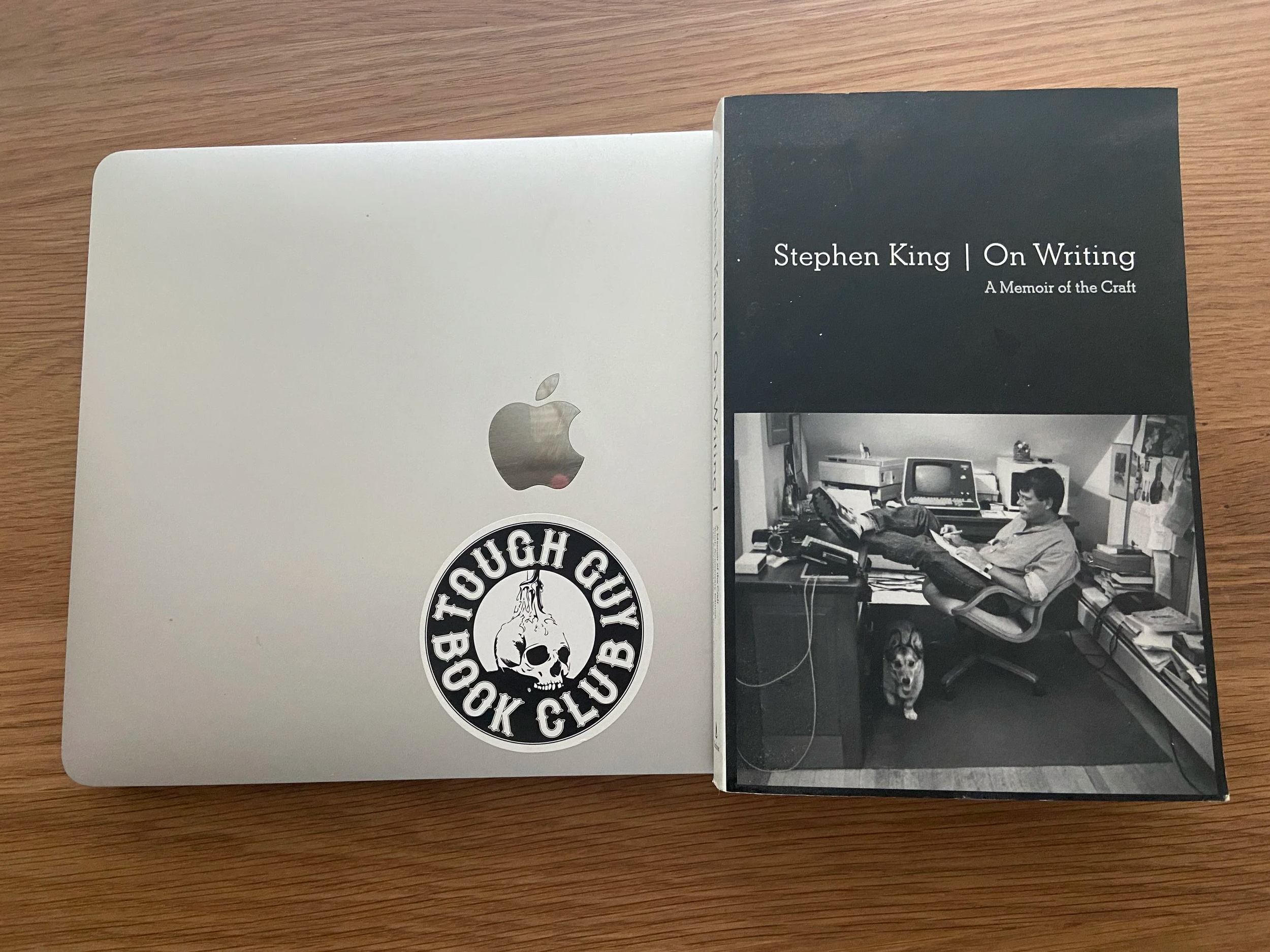
On Writing by Stephen King
Just wanted to give a heads up about Stephen King’s book On Writing. C’mon, everyone has heard of Stephen King. Not only is he an international multimillion best seller, but he is also prolific with over fifty books to his credit. Easily the most important genre writer of the last fifty years, he is the master of horror. And fuck can he tell a story. That is his greatest skill as a writer. You just start and two pages in you are hooked, ready and willing for everything that follows. It is a rare and special talent to be sure. I genuinely feel sorry for anyone who won’t pick up his books because they don’t like horror or fantasy or they have seen the movie. They miss out on a master storyteller doing his thing.
So now you know that I cannot praise him highly enough, what’s this book like I hear you ask? Well simply, On Writing is easily the best book on the craft of fiction writing I have read. There are many out there and of course there are also hundreds of podcasts and courses and even university degrees you can complete on the art of creative writing. But this one just spoke to me, and like the old TV shopping ads - Wait there is more!
On Writing begins semi-autobiographical, as a short memoir, briefly detailing King’s childhood and adolescence, and how events shaped the talent he kind of knew he had. This part of the book takes us through his development as a writer up to his massive success with books like The Shining and Cujo. It is a warts and all story as Stephen by that stage was a wealthy drug abuser and alcoholic. Before then, married young Stephen and his wife Tabitha were basically working poor until after years of publisher’s rejection slips, Carrie was published.
This is told in that folksy Stephen King style as if you are just sitting around the kitchen table having a chat but all the time there are little tips and comments that you can take on board as a writer.
The last two thirds of the book is a more direct instructional, starting with the section titled Toolbox. The key thing here is that you still know you are reading Stephen King, somehow even when he is not telling a story, but talking about dialogue, characterisation and pacing etc. his voice comes through. This is not a prescriptive how to book where you follow the steps as if you’re constructing a piece of furniture from Ikea. Mr King does not care if you like and believe what he says or not. He is just telling you how the writing process works for him and what he thinks might work for you as a storyteller. Telling you engagingly and empoweringly.
Any writer will learn something from this book but you know what? Even if you are neither a writer or a King fan I urge you to give it a read, if only to gain an entertaining insight into the creative’s lot and how success as in any field is always a mixture of talent, learnings and persistence.